Why More Landlords Are Switching to Short-Term Rentals
For decades, the traditional rental model was fairly simple.
Buy a property.
Find a tenant.
Sign a lease.
Collect rent.
And for many investors, that approach still works extremely well.
But over the last several years, some landlords have started asking a different question:
“What if the same property could generate more income without adding another unit?”
That question is one of the reasons short-term rentals have become such a popular topic among real estate investors.
Some people call it a loophole.
Others simply call it a different business model.
Either way, the idea is straightforward:
Instead of renting a property to one tenant for an entire year, landlords rent it to multiple guests throughout the year using platforms like Airbnb or VRBO.
And in the right market, the revenue difference can be substantial.
Disclaimer: This article is for informational purposes only and does not constitute tax or legal advice. Always consult with a licensed tax professional or attorney before making decisions that affect your taxes or legal obligations.
Why Some Landlords Are Making the Switch
The biggest reason is income potential.
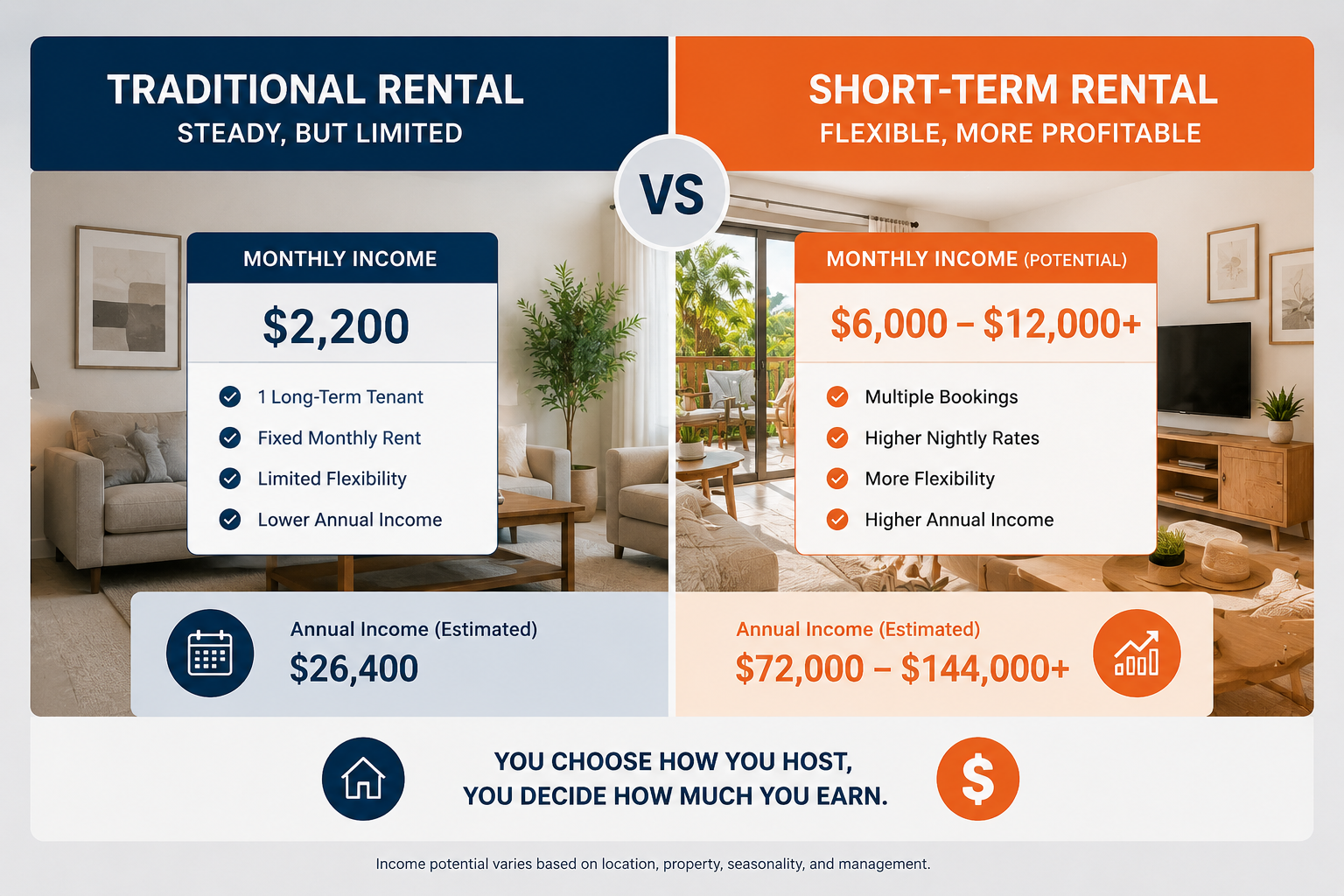
In certain markets, a property that rents for $2,000 per month on a traditional lease may generate significantly more through short-term bookings.
Of course, that isn’t guaranteed.
And it certainly isn’t true in every market.
But in areas with strong:
- tourism demand
- business travel
- university traffic
- seasonal visitors
- event activity
…the math can become very attractive.
This is why some investors have started viewing short-term rentals as an alternative strategy rather than simply another type of rental.
The “Loophole” Isn’t Really a Loophole
This is important.
When people hear the word loophole, they often imagine some legal workaround.
That’s not really what’s happening.
The opportunity exists because traditional rentals and short-term rentals operate under completely different economic models.
A long-term tenant pays for:
- stability
- predictability
- convenience
A short-term guest pays for:
- flexibility
- location
- convenience
- and temporary accommodation
Because those needs are different, the pricing structure is different too.
The same property can often command a much higher nightly rate than its equivalent monthly rent would suggest.
The tradeoff is that the landlord takes on more responsibility.
Higher Revenue Usually Means More Work
This is the part social media influencers often leave out.
A long-term rental might require:
- tenant screening
- lease management
- occasional maintenance
An Airbnb-style property often requires:
- guest communication
- cleaning coordination
- calendar management
- pricing optimization
- review management
- frequent maintenance
In other words:
the property starts behaving more like a hospitality business than a traditional rental.
And that additional work has a cost.
Whether it’s:
- your own time
- a property manager
- cleaning services
- or software tools
The extra income isn’t always completely passive.
Vacancy Works Differently
One advantage of long-term rentals is predictability.
The property may be occupied for:
- six months
- twelve months
- or even several years
With short-term rentals, occupancy fluctuates constantly.
A property might be:
- fully booked one month
- partially occupied the next
- and nearly empty during slower seasons
This variability creates both opportunity and risk.
The best-performing STR operators understand their local market extremely well and plan around seasonal demand changes.
Local Regulations Can Change the Equation
This is where many investors run into challenges.
As short-term rentals have grown, cities have responded in different ways.
Some markets welcome STR activity.
Others impose restrictions such as:
- permits
- registrations
- occupancy limits
- licensing requirements
- primary residence rules
A property that looks highly profitable on paper can become much less attractive if local regulations severely limit rental activity.
This is why experienced investors always evaluate regulations before converting a property.
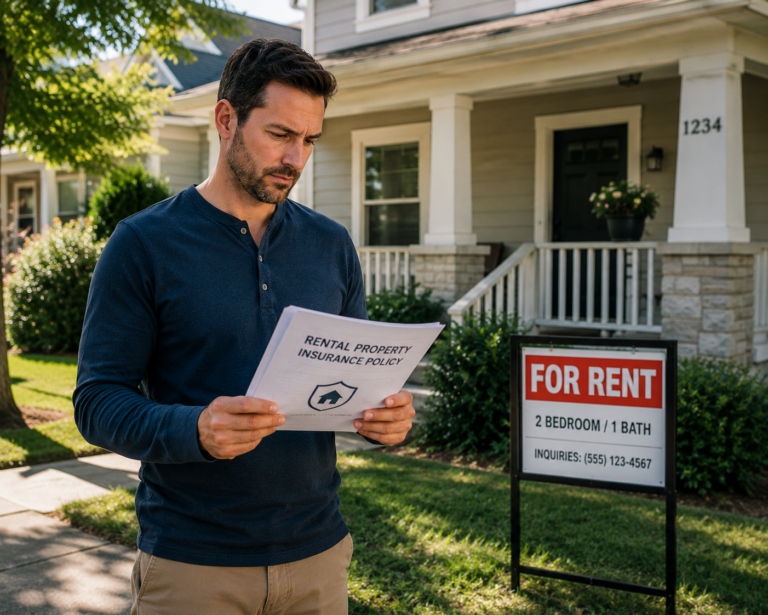
Insurance Is One of the Most Overlooked Differences
This is probably the most important consideration that many landlords miss.
A property operating as a short-term rental often carries a very different risk profile than a traditional rental.
Think about it:
A long-term tenant may live in the property for years.
A short-term rental may host dozens or even hundreds of guests annually.
That creates additional exposure involving:
- liability claims
- accidental damage
- guest injuries
- property misuse
- theft
- vandalism
Many landlords assume a standard homeowners policy automatically covers these situations.
That’s often not the case.
The moment a property starts generating income through frequent guest stays, insurers may evaluate the property very differently.
Related: Short-Term Rental Insurance Guide: What Every Host Should Know
More Revenue Doesn’t Automatically Mean More Profit
This is where many investors get surprised.
Higher gross revenue is exciting.
But net profit matters more.
Short-term rentals often come with additional expenses such as:
- cleaning fees
- furnishing costs
- software subscriptions
- management fees
- utility costs
- insurance premiums
The best investment decision isn’t necessarily the strategy that produces the highest revenue.
It’s the one that produces the strongest profit relative to the effort and risk involved.
Who Benefits Most From the STR Model?
Generally speaking, short-term rentals tend to work best for properties located in areas with:
- strong tourism demand
- major events
- business travel
- seasonal visitors
- limited hotel supply
Properties in purely residential areas may not experience the same demand levels.
Which is why market selection remains one of the most important parts of the equation.
The Bottom Line
The so-called “short-term rental loophole” isn’t really a loophole at all.
It’s simply a different way of monetizing a property.
For some landlords, converting a traditional rental into a short-term rental can significantly increase revenue.
For others, the additional work, regulation, and risk may outweigh the benefits.
The key is understanding that short-term rentals operate under a completely different business model than traditional leases.
And successful investors evaluate both the opportunity and the responsibilities before making the switch.
If you’re considering converting a rental property into a short-term rental, make sure your insurance coverage evolves along with your business strategy.
The right landlord or STR insurance policy can help protect both the property and the income opportunity that makes short-term rentals attractive in the first place.
Whether you own a long-term rental, vacation home, or Airbnb property, comparing landlord insurance options only takes a minute and could save you from expensive surprises later.Protect Your Rental Property With the Right Coverage