STR Insurance Explained: What Every Airbnb and Vacation Rental Host Should Know
Running a short-term rental isn’t the same as being a traditional landlord.
At first glance, the property might look identical.
It’s the same house.
The same roof.
The same kitchen.
But from an insurance company’s point of view, it’s a completely different business.
A long-term tenant might stay for a year or more.
A short-term rental could welcome dozens of different guests every month.
That extra turnover creates extra risk. And that’s exactly why STR insurance exists.
What Is STR Insurance?
STR insurance stands for short-term rental insurance.
It’s a type of insurance designed for properties rented out on platforms like:
- Airbnb,
- VRBO,
- Booking.com,
- and similar vacation rental websites.
These policies are built for homes that regularly host paying guests for short stays, usually less than 30 days.
Unlike a standard homeowners policy, STR insurance takes into account that the property is generating income and that different people are coming and going throughout the year.
Why Isn’t Regular Homeowners Insurance Enough?
This catches a lot of new hosts by surprise.
Many homeowners assume they can simply list their property on Airbnb and keep their existing insurance policy.
Unfortunately, it often doesn’t work that way.
A homeowners policy is designed for an owner-occupied home. Once you start renting it to guests, your insurer may see that as a business activity.
That can create coverage gaps for things like:
- guest injuries,
- accidental property damage,
- theft,
- vandalism,
- and liability claims.
In some cases, claims may even be denied if the insurer discovers the property was being used as a short-term rental without the proper coverage.
STR Insurance vs. Traditional Landlord Insurance
People often ask whether they need STR insurance or regular landlord insurance.
The answer depends on how the property is used.
A traditional landlord policy is built for long-term tenants who sign leases and treat the property as their primary residence.
Short-term rentals operate very differently.
Hosts deal with:
- frequent guest turnover,
- online booking platforms,
- cleaning crews,
- vacation travelers,
- and much higher occupancy changes.
From an insurance perspective, an Airbnb property behaves more like a small hospitality business than a traditional rental.
That’s why many hosts choose a policy specifically designed for short-term rentals.
What Does STR Insurance Usually Cover?
Coverage varies by insurer, but many short-term rental insurance policies can include protection for:
- the physical structure of the home,
- liability claims,
- guest injuries,
- vandalism,
- theft,
- certain types of accidental damage,
- and loss of rental income after a covered event.
For example, if a fire or severe storm makes your property unlivable, the right policy may help cover not only repairs but also the rental income you lose while the property is out of service.
That can make a big difference for hosts who depend on STR revenue to cover mortgage payments and other expenses.
Doesn’t Airbnb Already Provide Protection?
Airbnb and other platforms offer host protection programs, and they can absolutely be valuable.
But many experienced investors don’t rely on platform coverage alone.
The reason is simple.
Platform protections often come with:
- eligibility requirements,
- exclusions,
- reimbursement limits,
- and claim conditions.
They’re designed to supplement a host’s own insurance, not necessarily replace it.
That’s why many professional operators carry dedicated STR insurance even when they use Airbnb’s built-in host protections.
While Airbnb and Vrbo offer their own host protection programs, many experienced hosts choose dedicated coverage. You can read our complete Short-Term Rental Insurance Guide to compare platform protections, landlord policies, and specialized STR insurance.
Whether you own a long-term rental, vacation home, or Airbnb property, comparing landlord insurance options only takes a minute and could save you from expensive surprises later.Protect Your Rental Property With the Right Coverage
Why Short-Term Rentals Carry More Risk
The biggest difference is simple.
More guests mean more activity.
A long-term tenant may live in the property for years.
A vacation rental might host hundreds of different visitors over the same period.
That creates more opportunities for:
- accidental damage,
- slips and falls,
- theft,
- unauthorized parties,
- or liability claims.
Most guests are respectful.
But all it takes is one unexpected incident to turn a profitable rental into a very expensive problem.
STR Insurance Is Part of Running the Property Like a Business
Many new hosts think of an Airbnb as a side hustle.
Over time, though, most successful operators realize they’re running a business.
They manage:
- bookings,
- guest communication,
- cleaners,
- maintenance,
- pricing,
- and marketing.
Insurance should be viewed the same way.
It’s not just another expense.
It’s part of protecting the income the property generates.
What About Taxes and Regulations?
Insurance is only one part of the equation.
Short-term rentals also come with different tax rules and local regulations than traditional long-term rentals. Many cities now require permits, registrations, or occupancy taxes for STR operators. Some have restrictions on where vacation rentals can operate.
Before listing a property, it’s always worth checking local rules and making sure your insurance policy matches the way the property is actually being used.
How to Choose the Right STR Insurance
No two rental properties are exactly alike.
A beach house in California faces different risks than a cabin in Colorado or an urban apartment listed on Airbnb.
When comparing policies, hosts should look closely at:
- liability limits,
- loss of rental income coverage,
- guest-related damage,
- vacancy clauses,
- and any exclusions related to short-term rentals.
If you operate or are planning to operate a vacation rental in California, you can also learn more about your coverage options on our California Short-Term Rental Insurance guide.
The Bottom Line
Short-term rentals can be a fantastic investment.
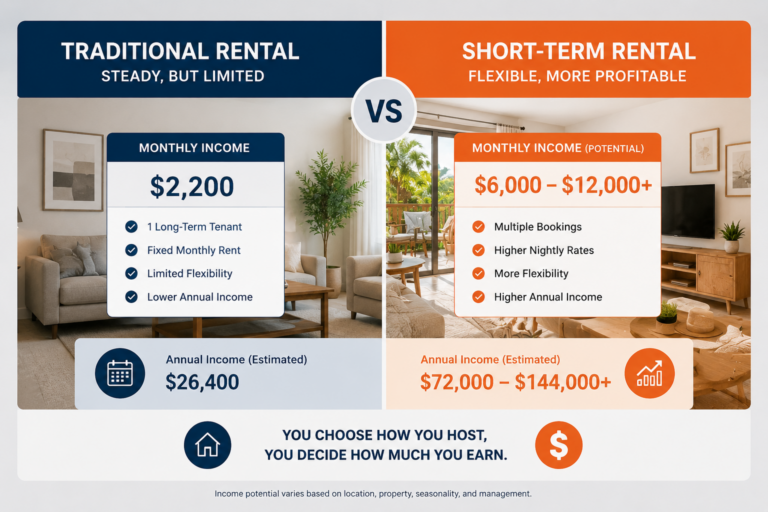
They often offer more flexibility and, in the right market, higher income potential than traditional long-term rentals.
But they also come with different risks.
A standard homeowners policy wasn’t built for a property with a constant flow of paying guests. And a basic landlord policy may not fully reflect the realities of running an Airbnb or VRBO business.
That’s where STR insurance comes in.
The right policy helps protect not only the property itself, but also the income and long-term investment you’ve worked hard to build.
Frequently Asked Questions
What is STR insurance?
STR insurance, or short-term rental insurance, is specialized coverage designed for properties rented out through platforms like Airbnb and VRBO.
Do I need STR insurance for Airbnb?
In many cases, yes. Standard homeowners insurance may not fully cover the risks associated with short-term rental activity.
What’s the difference between STR insurance and landlord insurance?
Landlord insurance is generally designed for long-term tenants. STR insurance is built for properties with frequent guest turnover and vacation-style bookings.
Does Airbnb’s Host Protection replace STR insurance?
Not necessarily. Many hosts use Airbnb’s protections alongside a dedicated STR insurance policy for broader coverage.
Is STR insurance more expensive?
It can be. Short-term rentals usually involve higher liability and property risks, which often lead to higher premiums than standard landlord insurance.