ACV vs RCV: Why Your First Claim Check Is Smaller Than the Estimate
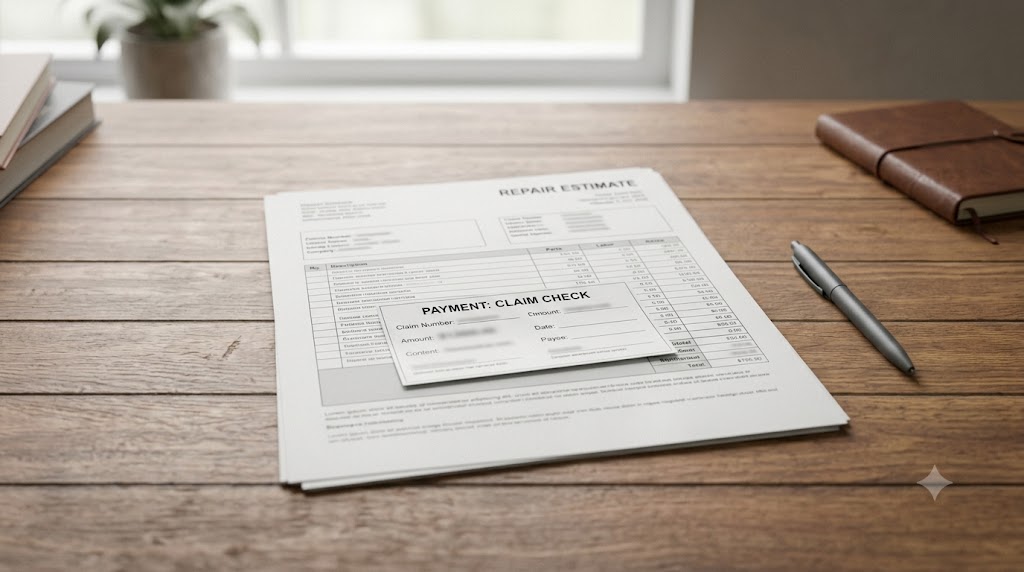
The adjuster scopes your roof at $20,000.
You read the estimate. You see the number. You wait for the check.
The check arrives for $12,500.
Nothing has gone wrong.
Nobody has made a mistake.
That’s just how the policy works, and the reason sits in two lines on your declarations page that most landlords have never read.
This post is about what happens between the estimate and the check.
Before you read on, make sure you have a basic understanding of landlord insurance by reading our Complete Rental Property Insurance Guide.
Two Separate Questions
Every claim answers two questions.
Is this loss covered?
That’s your policy form. DP-1 is named-peril, DP-3 is open-peril, and the difference decides whether you have a claim at all. We’ve covered that separately in our guide to DP-1 vs DP-3 landlord policies.
How much do you get paid for it?
That’s your settlement basis.
And that’s this post.
The two usually travel together, which is why they get confused. But they’re different mechanisms, and a policy can be generous on one and stingy on the other.
What ACV Actually Means
Actual cash value is what the damaged thing was worth on the day it broke.
Not what it costs to replace.
What it was worth.
Depreciation in insurance means the loss of value in an item over time. Under an ACV policy, you’re only covered for that depreciated value.
Insurers typically calculate it based on the age of the item, how well it’s held up over the years, and how obsolete it is compared to newer versions.
Here’s the arithmetic in its simplest form.
Take a roof with a 20-year useful life that’s 10 years old. It has depreciated 50 percent.
Replacement cost: $20,000.
Depreciation at 50%: $10,000.
ACV: $10,000.
Then your deductible comes off that.
On an ACV policy the insurer deducts depreciation permanently, and you cover the gap yourself.
What RCV Actually Means
Replacement cost value pays what it costs to put things back.
No depreciation deducted.
Same roof, same storm, $20,000 scope, and the policy is meant to fund a $20,000 roof.
Which sounds simple.
It isn’t, and this is where most landlords get surprised.
The Part Nobody Explains: RCV Pays in Two Checks

With RCV, you’ll typically receive at least two payments after filing a claim. The first is for what your property is worth in its used condition, the ACV. The second comes once you submit proof that all repairs are complete.
Read that again.
Your RCV policy pays you the ACV first.
Recoverable depreciation is the money the insurance company holds back until you prove you’ve repaired or replaced the damaged items.
So the sequence is:
- Adjuster approves the scope at full replacement cost
- Carrier issues the first check at ACV, minus your deductible
- You complete the repairs
- You submit proof
- Carrier releases the holdback
If your roof replacement costs $20,000 and the adjuster determines $5,000 in depreciation, the insurer initially pays $15,000. Once you complete repairs and provide proof, they release the remaining $5,000.
Which means you’re required to pay out of pocket to cover that depreciated amount until you can prove the work is done.
That’s a cash flow problem, not a coverage problem.
But it’s a real one.
Especially if you own several properties and a storm hits all of them at once.
Recoverable vs Non-Recoverable Depreciation
This is the distinction that decides whether the holdback ever comes back.
Recoverable depreciation is money that’s yours if you do the work.
It only applies under RCV policies.
Non-recoverable depreciation is gone.
Under an ACV policy, depreciation is permanently subtracted and there is no second payment.
Non-recoverable depreciation is the part of an item’s value that has decreased over time and simply isn’t paid back.
So on an ACV policy, the $10,000 in our example isn’t held back.
It’s just not paid.
There’s no second check coming because there’s nothing to prove.
Three Ways the Holdback Never Reaches You
Even on a genuine RCV policy, the second check isn’t automatic.
You don’t do the work.
You only get the recoverable depreciation for the items you actually repair or replace. If you decide not to fix something, you keep the ACV check but forfeit the holdback for that item.
Tempting on a rental you’re about to sell. Expensive if you change your mind.
You miss the deadline.
Most policies have a deadline, often 180 days to a year from the date of loss, to complete repairs and claim the holdback. Some carriers allow one to two years.
Ask your adjuster for the specific deadline in writing.
Insurers know some policyholders miss the deadline or choose not to complete repairs. In both cases, they pay out less than they otherwise would have.
You don’t ask.
It isn’t automatic. You have to actively request the release and submit the required documentation, typically a final invoice, completion photos, and proof of payment.
Nobody calls to remind you.
The Roof Endorsement That Quietly Undoes Your RCV
Here’s the part worth reading twice.
Your policy can say replacement cost and still pay ACV on your roof.
A growing share of new and renewal policies in states like Maryland, Florida, and Virginia carry an ACV endorsement specifically for roof surfacing. The reason is loss ratios. Carriers paid out more than they collected on hail and wind claims for several consecutive years, and ACV endorsements transfer the depreciation hit back to the property owner.
Once a roof reaches 10 to 15 years old, some policies switch from RCV to ACV. This is sometimes called the 10-year roof rule.
Some policies switch at renewal. Others add a separate endorsement that changes the roof loss settlement terms. Either way, it’s easy to miss if you’re not reading the declarations page closely.
The language to watch for:
“Roofs over 10 years old are ACV only” means the moment your roof hits that age, roof claims start subtracting depreciation even if the rest of the home is still RCV.
“Depreciation schedule applies” means the carrier uses a chart to reduce value based on roof age and material.
And the endorsement language is usually buried in a separate roof surfacing schedule rather than shown on the declarations page.
So your policy is RCV.
Your roof isn’t.
And the roof is the thing most likely to be damaged.
Where This Gets Genuinely Ugly
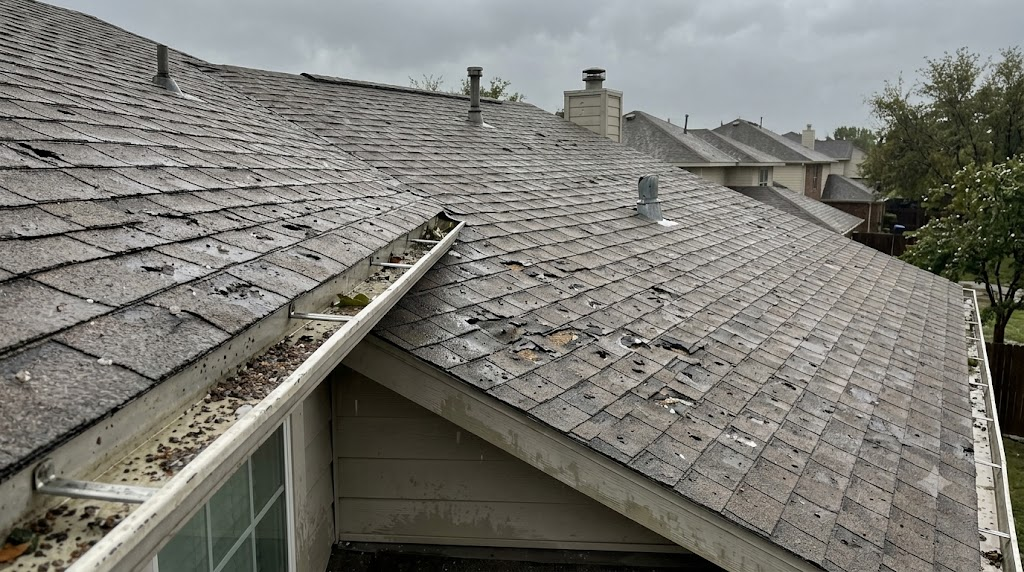
Combine an ACV roof with a percentage wind deductible and the math can stop working entirely.
A percentage deductible is manageable on an RCV policy, where the eventual payout brings the project down to a few thousand out of pocket. The same deductible on an ACV policy can mean the carrier owes you nothing, because once depreciation comes off the replacement cost and the deductible comes off the depreciated number, the result can be at or below zero.
Florida policies issued after 2022 commonly include separate hurricane and wind/hail deductibles, often 2% to 5% of dwelling value, which compounds the problem.
There are documented claim files where a 5% wind deductible plus an ACV roof endorsement produced a zero-dollar payout on a real, documented hail loss. The damage was there. The policy math just didn’t pencil.
That’s worth sitting with.
A valid claim. Real damage. An approved scope.
And nothing paid.
If you want the deductible side of that equation, we covered it in our guide to how landlord insurance deductibles work.
Does Labor Depreciate?
This one is genuinely contested, and it can be worth thousands.
Back to the 20-year roof at 10 years old.
Split a $25,000 scope into $12,500 materials and $12,500 labor. Depreciate both at 50% and the ACV is $12,500. Depreciate materials only and leave labor alone, and the ACV is $18,750.
Same roof. Same age. $6,250 apart.
Multiple states have pushed back on labor depreciation. Michigan issued a bulletin in 2024 prohibiting insurers from depreciating labor or other non-tangible costs when calculating ACV unless the policy contains a specific endorsement allowing it. Courts in Kentucky, Arkansas, and Kansas have addressed the issue with varying results depending on policy language.
The trend favors policyholders. But whether your insurer can depreciate labor depends on your state’s law and your policy’s exact wording.
So if you see labor depreciated on an estimate, don’t just accept it.
Some states prohibit it. Others allow it.
It’s worth checking your state insurance department’s position, and asking the adjuster to confirm the figure is compliant with local regulations.
That’s a reasonable question to ask.
Not an accusation.
How to Find Out What You Actually Have
Open your policy PDF and search it.
Search “Loss Settlement” first. Then search “ACV” or “Actual Cash Value.”
If the loss settlement clause says replacement cost without deduction for depreciation, you have RCV. If the policy is silent on the roof specifically and only describes Coverage A as RCV, the roof typically inherits the dwelling treatment.
Look for phrases like “roof loss settlement,” “depreciation schedule,” or “actual cash value.”
If you see a schedule that reduces coverage year by year, you’re likely dealing with ACV or limited coverage.
And review the roof coverage endorsement section, not just the declarations page.
If the paperwork defeats you, one question to your agent settles it:
“Is my roof rated ACV or RCV on this policy?”
Side by Side
| ACV | RCV | |
|---|---|---|
| What it pays | Depreciated value | Cost to repair or replace |
| Depreciation | Permanently deducted | Held back, then released |
| Number of checks | One | Two |
| Second check requires | N/A | Completed repairs plus proof |
| Deadline to claim holdback | N/A | Typically 180 days to 2 years |
| Out of pocket | The full depreciation gap | Deductible, plus the holdback until repairs are done |
| Typical form | DP-1 | DP-2, DP-3 |
| Premium | Lower | Higher |
Roof surfacing may be settled at ACV even on an RCV policy. Check your endorsements.
What to Do Before Your Next Renewal

Four things, none of them take long.
Confirm your settlement basis. Dwelling and roof separately. They may not match.
Find your holdback deadline if you’re on RCV. You want that number before you need it, not after.
Reserve for the gap. On RCV, you need enough cash to fund repairs before the second check lands. On ACV, you need enough to cover the depreciation permanently.
Ask what RCV would cost if you’re on ACV with an aging roof. It’s often a smaller premium difference than the depreciation gap it prevents.
The Bottom Line
Settlement basis isn’t the interesting part of an insurance policy.
It’s just the part that decides what you’re paid.
ACV pays what your roof was worth. RCV pays what a roof costs. On a ten-year-old roof, that’s a five-figure difference on a single claim.
And RCV isn’t a promise of a full check on day one. It’s a promise of a full check eventually, if you do the work, keep the receipts, and ask before the deadline.
The landlords who get burned aren’t the ones who chose ACV.
They’re the ones who thought they had RCV.
Go and check which one your roof is on.
Find Out What Your Policy Would Actually Pay
Whether you own one rental or a portfolio, comparing landlord insurance takes about a minute and tells you what settlement basis you’re being quoted, including on the roof.
Whether you own a long-term rental, vacation home, or Airbnb property, comparing landlord insurance options only takes a minute and could save you from expensive surprises later.Protect Your Rental Property With the Right Coverage
If you own rental property with an aging roof, the settlement basis is worth confirming before storm season rather than after.
The right landlord insurance policy should pay what repairs actually cost, not what a depreciated roof was worth on the day it blew off.