HOA Fines and Landlord Insurance: Who Actually Pays, and What’s Covered
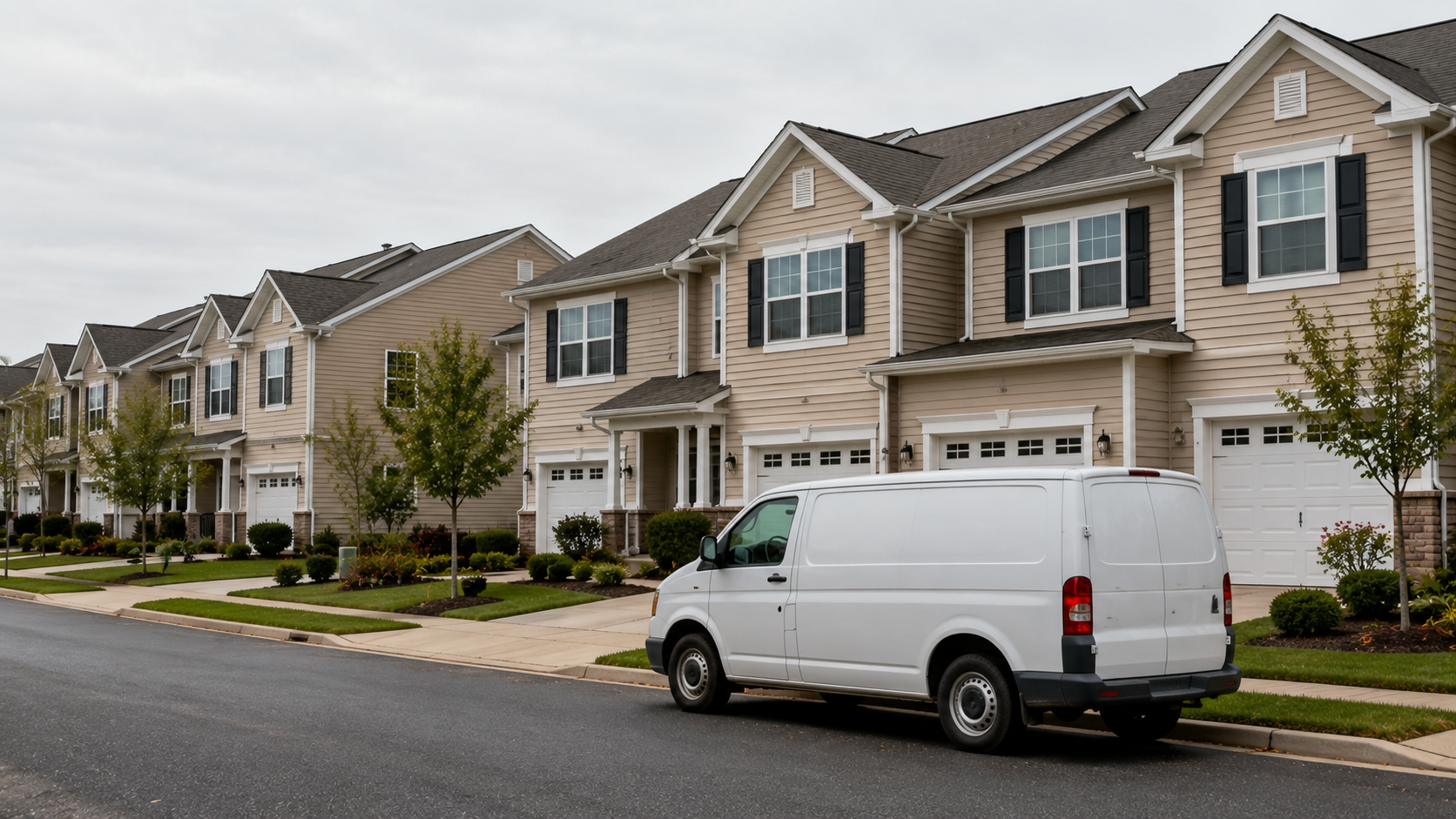
Picture a fairly ordinary Tuesday. A notice arrives in the mail: $250, for a work van parked overnight on a street where the HOA has been perfectly clear that work vans may not park overnight. You didn’t park it. Your tenant did, twice already, after ignoring two warnings you never saw.
You forward the notice. Your tenant tells you it isn’t their problem. Your lease says it very much is their problem. And the HOA, when you explain all this, does not react at all, because the HOA has never read your lease and has no intention of starting now.
This is the single most common HOA situation landlords walk into, and most lease language doesn’t solve it the way landlords assume it does. Below: what these fines are, why they follow the deed instead of the tenant, how to push back, and whether landlord insurance picks up any of it.
What an HOA fine actually is
A homeowners association isn’t a neighborhood committee with opinions. It’s a private legal entity that enforces a set of covenants, conditions, and restrictions, the CC&Rs, recorded against the title of every property in the community.
That recording is the important part. CC&Rs run with the land. They bind whoever owns the property, forever, regardless of who bought it first or who lives there now.
When someone violates one of those covenants, the HOA fines the owner. The fine becomes a genuine debt, collectible the way any debt is collectible: collections activity, a court judgment, and in most states a lien against the property that can, if it’s neglected long enough, end in foreclosure.
The violations landlords see over and over:
- Parking: street parking, RVs, work vehicles, commercial lettering on a vehicle
- Trash and recycling: bins left at the curb, wrong day, wrong sorting
- Landscaping: overgrown grass, dead plants, unapproved changes
- Exterior modifications: paint, satellite dishes, fences, sheds, anything installed without approval
- Pets: breed limits, leash rules, waste, undeclared animals
- Noise
- Short-term rental activity, which a large share of HOAs restrict or ban outright
- Pool and common-area rules
What they cost
Fines run anywhere from $25 to $1,000+ per violation. Most first offenses land between $50 and $250. That range sounds survivable, and on its own it is. Two structural features are what turn a survivable fine into a memorable one.
Daily accrual. Plenty of HOAs charge a per-day rate for as long as a violation continues. A $25/day parking fine is trivial on day one and $525 by week three. This is where nearly every surprise bill comes from.
Escalating schedules. Repeat the same violation and the price climbs. A typical ladder: warning → $50 → $100 → $250 → daily compounding after that. Most schedules keep a violation “live” for around 12 months, so a bad year escalates quickly.
State law caps some of this, unevenly:
- California (effective 2025) limits individual violations to $100 per occurrence absent specific procedural protections
- Florida and Texas leave most caps to the HOA’s own documents but mandate notice and hearing procedures
- Several states require notice and a hearing before a fine is enforceable at all
- Most states permit per-day fines on continuing violations but cap the daily rate
Which state your property sits in is what governs here, not where you live.
Why the bill is yours
Two structural reasons, and neither has anything to do with fairness.
The CC&Rs bind the owner of record. The HOA’s power to fine comes from covenants recorded against the property and the person who owns it. Your tenant is not a party to those covenants. They never agreed to them in the legal sense the HOA would need to enforce directly against them.
The enforcement mechanism is a lien on real estate. An HOA can’t lien a tenant’s wages or bank account. It can only attach to real property, which is yours. Even an HOA that wanted to bill your tenant would have no way to make the bill stick.
You can absolutely pursue your tenant under the lease. But note the order of operations: you pay the HOA to stop the lien, then you chase the tenant. And tenants who rack up fines frequently don’t have the money, ignore the demand, or have one foot out the door by the time the dispute matures. The cost tends to stay where it landed.
What lease language can and can’t do
Lease clauses do real work here. They just don’t do the work most landlords think they do.
Clauses worth having:
- HOA rules incorporation: The tenant confirms they’ve read the HOA rules and agrees to follow them. This makes an HOA violation a lease violation, which gives you leverage you otherwise wouldn’t have.
- Indemnification for tenant-caused fines: The tenant reimburses you for fines caused by their actions or by anyone they let onto the property.
- Notice and right to cure: You notify the tenant of any HOA warning and give them a window to fix it before escalation. This also protects you from any suggestion you enabled the violation by sitting on it.
- Eviction grounds for repeat violations: Most state lease forms allow eviction for material breaches; good drafting names repeated HOA violations specifically.
What none of it changes: you still pay first. Courts will enforce indemnification, but only against a tenant with assets worth collecting. And a great many fines are too small to justify small-claims court even when you’d win.
Treat the lease as a deterrent and as documentation. Not as a recovery mechanism.
How to fight a fine
A meaningful share of appeals succeed, particularly where the fine has procedural defects or exceeds what the HOA is actually authorized to do.
Read the citation properly. You want the specific rule cited, the date and time alleged, whatever evidence they’re relying on (photos, complaints, inspection notes), the appeal path, and the deadline.
Check it against the CC&Rs and bylaws. HOAs fine for things their own documents don’t prohibit more often than you’d expect. If the alleged violation isn’t in the recorded documents, the fine may not be enforceable.
Request a hearing in writing. Most states require a hearing before a fine is imposed, and many require written notice of the date. A written request inside the deadline preserves your procedural rights, verbal doesn’t.
Document the negative. If the tenant was away, the van wasn’t there, the dog isn’t yours, the bins went out on the correct morning, gather that evidence now, while it’s still up for grab.
Know your state’s deadlines. California gives owners strong procedural protection. Florida has specific notice and hearing requirements. Texas defers more to the HOA’s own documents. Again: the property’s state, not yours.
Does landlord insurance cover HOA fines?

Only with an endorsement and only if you’ve added it.
HOA Fines Coverage is optional. It depends upon what a standard policy covers and whether you included it in your policy or not. Without it, every fine is out of pocket. Where carriers that offer it commonly set limits around:
- $500 per fine
- $1,000 aggregate per policy period (usually annual)
Modest, but well-matched to the fines landlords actually get. A $250 parking fine sits comfortably inside the per-fine cap. Two $400 fines in one year both clear the cap and together stay under the aggregate. A single $1,000 fine gets $500 of coverage and no more.
The endorsement applies to fines billed to you for violations at the rental property, including violations your tenant caused. It typically excludes:
- Fines from your own willful non-compliance
- Fines connected to criminal acts
- Special assessments for capital improvements (not fines, even though the invoice feels identical)
- Late fees on regular dues
- Punitive damages arising from HOA litigation
It’s one of the cheapest optional coverages on a landlord policy, often under $50/year. One typical violation returns the premium several times over.
The math, in four real situations
One parking fine, $250. Van parked overnight three times, HOA escalates to $250.
The uncomfortable answer: with a typical $1,000 landlord deductible, this fine sits below the deductible and the policy pays nothing. The endorsement earns its keep when fines stack or land in the $300–$500 band where they clear the deductible.
That result surprises a lot of landlords, and it isn’t specific to HOA fines. It’s how deductibles work across the whole policy. Any loss smaller than your applicable deductible isn’t a claim. It’s a repair bill. There’s no partial payment and nothing carried forward.
If that math is new to you, this guide to when your landlord policy actually pays covers the rest of it, including the second deductible most landlords don’t know they have.
Tenant’s dog, $400 plus daily fees. Dog escapes three times in two weeks. $400 fine plus $25/day until the fence is repaired, $475 total.
Covered in full, minus deductible. Aggregate consumed: $475 of $1,000. You keep $525 of headroom for the rest of the year.
Three fines in one year, $1,150 total. $300 trash in March, $450 landscaping in July, $400 exterior modification in November.
Each clears the per-fine cap. But after the first two, $750 of the $1,000 aggregate is gone. The third gets $250 of coverage. You absorb $150 plus three deductibles.
One large fine, $1,200. Tenant builds an unapproved deck extension.
The per-fine cap bites: $500 covered, minus deductible. You absorb $700. This is the scenario where the cap hurts most.
HOA costs no policy will ever touch
- Regular dues. A cost of ownership, not a fine. Uninsurable.
- Special assessments. When the HOA votes a one-time charge on every owner for a new roof or a resurfaced lot, it’s mandatory and it’s yours.
- Late fees on dues. Missed payment, your problem, endorsement or not.
- Foreclosure costs. If unpaid fines and dues run to foreclosure, the costs, attorney fees, and lost equity are all uncovered.
- Litigation against the HOA. Liability coverage can occasionally touch a dispute in narrow circumstances, but generally this is out of pocket.
- Tenant counter-claims: A tenant arguing you should have warned them about a rule. Route through liability coverage only if actual damages are involved.
The seven-step response when a notice arrives
- Read it and diary the deadlines. Most HOAs allow 30–60 days to request an appeal. Miss it and the fine is usually final.
- Establish whose violation it is. If it’s the tenant’s, notify them in writing the same day. Attach the notice, cite the lease clause.
- Decide: pay or appeal. Small fines for legitimate violations usually aren’t worth the fight. Large fines, repeat fines, and disputed fines usually are.
- If appealing, file in writing, inside the window. Request the hearing. Bring documentation, photos, and your correspondence with the tenant.
- Pay if that’s what stops the lien. In most states paying doesn’t waive your appeal rights. Payment protects the property; the appeal pursues the money.
- File the insurance claim if the endorsement is on your policy. Don’t sit on it. Filing within a few weeks of the notice keeps things simple.
- Pursue reimbursement under the lease. Written demand first. If it’s ignored, decide whether the amount justifies small claims.
Where state law changes the picture
Federal HOA law barely exists. Everything meaningful happens at state and local level.
California capped individual violations at $100 per occurrence under its 2025 reforms and layered on procedural protections.
Florida requires written notice and a hearing before any fine is enforceable, including a 14-day pre-hearing notice and a written explanation of the alleged violation. Deadlines are tight.
Colorado statutes specifically address tenant violations and an owner’s enforcement rights against tenants, noticeably more landlord-favorable than average.
New York is fragmented, varying by county and municipality, with local rules that supplement and sometimes diverge from the state framework.
Tennessee and much of the Southeast defer heavily to the HOA’s own documents, so the CC&Rs carry more weight than state procedure.
If you hold property in several markets, the local rules matter far more than any national picture. That’s where the enforcement teeth actually are.
DP-1 vs DP-3: does the form matter?
No. Both forms accept the HOA Fines endorsement, and the per-fine and aggregate limits are identical on either.
The DP-1/DP-3 distinction, actual cash value vs. replacement cost, named-peril vs. open-peril, governs property settlement, and HOA fines aren’t a property-damage event in underwriting terms. Choose your form on the property side of the policy; it won’t move this.
That said, if you’re not sure which form you’re on, it’s worth finding out. It decides far more about your other claims than it does about this one. Here’s how to tell whether you have a DP-1 or a DP-3, and why the cheapest quote is usually the narrower policy.
Whether you own a long-term rental, vacation home, or Airbnb property, comparing landlord insurance options only takes a minute and could save you from expensive surprises later.Protect Your Rental Property With the Right Coverage
The honest take
For most landlords with a property inside an HOA, this endorsement is one of the easier decisions on the whole policy. Under $50 a year, typically. The $500/$1,000 limits are not generous, but they comfortably absorb the parking, trash, and pet violations a rental accumulates over a few years.
Most valuable if you have:
- Short-term rentals in HOA communities, where guest behavior drives frequent violations
- Condos or HOA-governed single-family rentals in active-enforcement communities
- First-time renters, whose HOA learning curve is longer
- Several properties across several HOAs, where exposure compounds
Least valuable if you have:
- Rentals outside any HOA
- Long-term, low-drama tenants in mature communities
- Property in communities where the HOA rarely fines anyone
The three tools work as a system. Strong lease language without appeal discipline still means the fine hits your property first. A perfect appeal record with weak lease language means no recovery from the tenant who caused it. The endorsement covers whatever survives the other two.