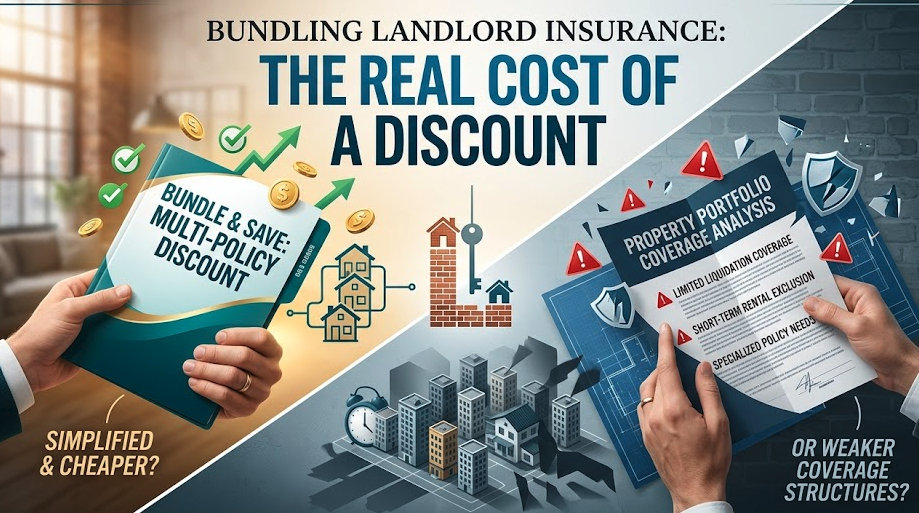
The Pros and Cons of Bundling Landlord and Auto Insurance
At some point, almost every landlord hears the same pitch from an insurance company:
“Why not bundle your policies and save money?”
And honestly, sometimes that advice makes perfect sense.
Insurance carriers love bundling because it keeps customers inside their ecosystem longer. But landlords also benefit in certain situations through:
- lower premiums
- simplified billing
- easier claims management
- and multi-policy discounts
The problem is that bundling is not automatically the best financial move in every case.
Especially for landlords who:
- own multiple properties
- operate short-term rentals
- or already carry specialized coverage
Because while bundling can absolutely reduce insurance costs, it can also sometimes lead landlords into weaker coverage structures without realizing it.
And that distinction matters more than the advertised discount.
What Does “Bundling” Insurance Actually Mean?
Bundling simply means purchasing multiple insurance products from the same provider.
For landlords, that often includes combinations like:
- landlord insurance + auto insurance
- landlord insurance + homeowners insurance
- multiple rental property policies
- umbrella liability coverage
- or even STR insurance alongside personal coverage
Most insurers offer discounts when customers consolidate policies together.
In many cases, the savings are real.
But the actual value depends heavily on:
- the insurer
- the property type
- claims history
- location
- and the complexity of the landlord’s portfolio
Why Insurance Companies Push Bundling So Hard
From the insurer’s perspective, bundled customers are usually:
- more profitable
- less likely to switch providers
- and statistically easier to retain long term
So carriers are often willing to reduce pricing slightly to keep multiple policies under one account.
That is why you will commonly see discounts advertised for combining:
- auto insurance
- homeowners insurance
- landlord insurance
- renters insurance
- or umbrella policies
And to be fair, for some landlords, these savings can become meaningful over time.
Especially if:
- the driving history is clean
- claims history is limited
- and the properties are considered low-risk
Where Bundling Can Actually Help Landlords
The biggest advantage is usually convenience.
Managing insurance across several policies and renewal dates can become frustrating quickly, particularly for investors managing multiple assets.
Bundling can simplify:
- billing
- renewals
- account management
- and communication during claims
In some cases, landlords may also qualify for:
- loyalty discounts
- higher coverage limits
- deductible flexibility
- or reduced administrative friction
For example:
if a landlord already has strong auto coverage with a carrier that also specializes in rental properties, bundling may genuinely lower overall costs without sacrificing protection.
And for smaller landlords with:
- one or two rental properties
- stable tenants
- and straightforward insurance needs
…the math often works reasonably well.
But Bundling Is Not Always the Cheapest Option
This is where things get interesting.
A bundled discount can sometimes create the illusion of savings while the actual coverage becomes weaker or more expensive elsewhere.
For example:
an insurer may offer:
- a 15% bundle discount
- but still charge higher baseline premiums than competing standalone policies
So technically, you are getting a “discount,” but not necessarily paying less overall.
This becomes even more important for:
- vacation rental owners
- Airbnb hosts
- higher-risk properties
- coastal markets
- or landlords with older buildings
Because not every insurer handles specialized rental risks equally well.
Want real savings? Let Coverlyn help you find affordable rental property insurance.
STR Owners Need to Be Especially Careful
Short-term rental properties add another layer of complexity.
A property listed on Airbnb or VRBO operates very differently from a standard long-term rental.
There is:
- higher guest turnover
- increased liability exposure
- more frequent claims potential
- and often stricter underwriting requirements
Some insurance companies are excellent at traditional auto and homeowners coverage but weak when it comes to STR-specific protection.
And this is where landlords sometimes accidentally create coverage gaps while chasing bundle discounts.
For example:
a bundled policy may technically include rental coverage, but exclude:
- frequent guest stays
- business-use classifications
- or certain liability situations related to vacation rentals
That can become extremely expensive later if a claim gets disputed.
The Real Question Is Coverage Quality
Most experienced investors eventually realize something important:
the cheapest insurance policy is not always the least expensive one long term.
Coverage quality matters more than marketing discounts.
Especially when dealing with:
- lawsuits
- fire claims
- liability incidents
- guest injuries
- or loss-of-income situations
A strong standalone landlord or STR policy may sometimes cost slightly more upfront while offering:
- broader protection
- fewer exclusions
- higher liability limits
- and better claim handling
Which often matters much more during an actual emergency than saving a few dollars per month.
When Bundling Usually Makes Sense
Bundling often works best when:
- the insurer has strong landlord expertise
- the property risks are relatively straightforward
- the coverage terms remain competitive
- and the landlord values operational simplicity
It can be particularly useful for:
- first-time landlords
- small portfolios
- or owners who prefer centralized account management
The key is making sure the bundled discount is not hiding weaker protection underneath.
When Separate Policies May Be Better
Some landlords benefit more from specialized insurers instead.
Especially investors dealing with:
- multiple states
- vacation rentals
- older properties
- luxury rentals
- or higher liability exposure
In those situations, mixing providers sometimes creates better overall protection even if the monthly premium ends up slightly higher.
Because specialized insurers often understand rental risk much better than general consumer insurance companies.
The Bottom Line
Bundling landlord and auto insurance can absolutely save money in certain situations.
But it should never be evaluated based on discount percentages alone.
The real question is:
does the bundled policy still properly protect the actual risks tied to the property?
Especially for landlords operating short-term rentals or income-generating properties, coverage details matter far more than marketing slogans.
Because when a major claim happens, the quality of the protection usually matters a lot more than whether the policy came with a multi-line discount.
If you own rental property or operate short-term rentals through Airbnb or other vacation rental platforms, it may be worth comparing bundled insurance offers against dedicated landlord or STR coverage before making a decision.
The right insurance structure should balance both cost savings and proper protection for the way the property is actually being used.
Whether you own a long-term rental, vacation home, or Airbnb property, comparing landlord insurance options only takes a minute and could save you from expensive surprises later.Protect Your Rental Property With the Right Coverage