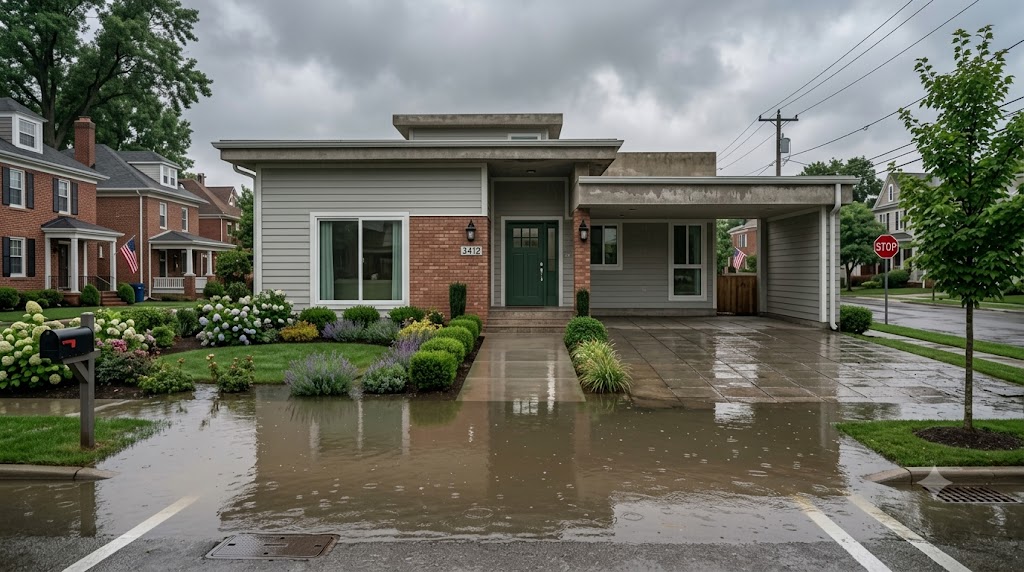
Flood Insurance for Rental Properties: What Landlords Actually Need
There’s a version of this conversation that happens every storm season.
A landlord calls their carrier after water comes through the property.
They have landlord insurance. They’ve had it for years. They’ve never missed a payment.
And the answer is no.
Not “let’s look at the circumstances.” Not “it depends on the damage.”
Just no.
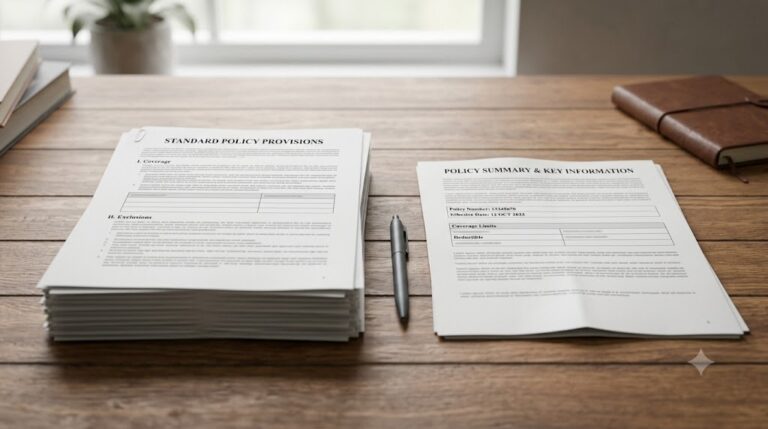
Because flood isn’t an exclusion buried in the fine print of a cheap policy. It’s excluded from every landlord policy, on every form, from every carrier.
If water rose from outside and came in, your landlord policy has nothing to say about it.
Why Flood Is Different From Every Other Exclusion
Most exclusions are negotiable in some sense.
Vandalism can be endorsed onto a DP-1. Wind and hail carry their own deductible, but they’re covered. Even mold has workarounds on some policies.
Flood isn’t like that.
There’s no endorsement. No rider. No optional add-on your agent forgot to mention.
Flood requires an entirely separate policy.
So when landlords say “I have full coverage,” what they usually mean is they have a policy with no flood coverage and haven’t had reason to find out yet.
What Counts as a Flood
This part matters more than people expect, because it decides which policy pays.
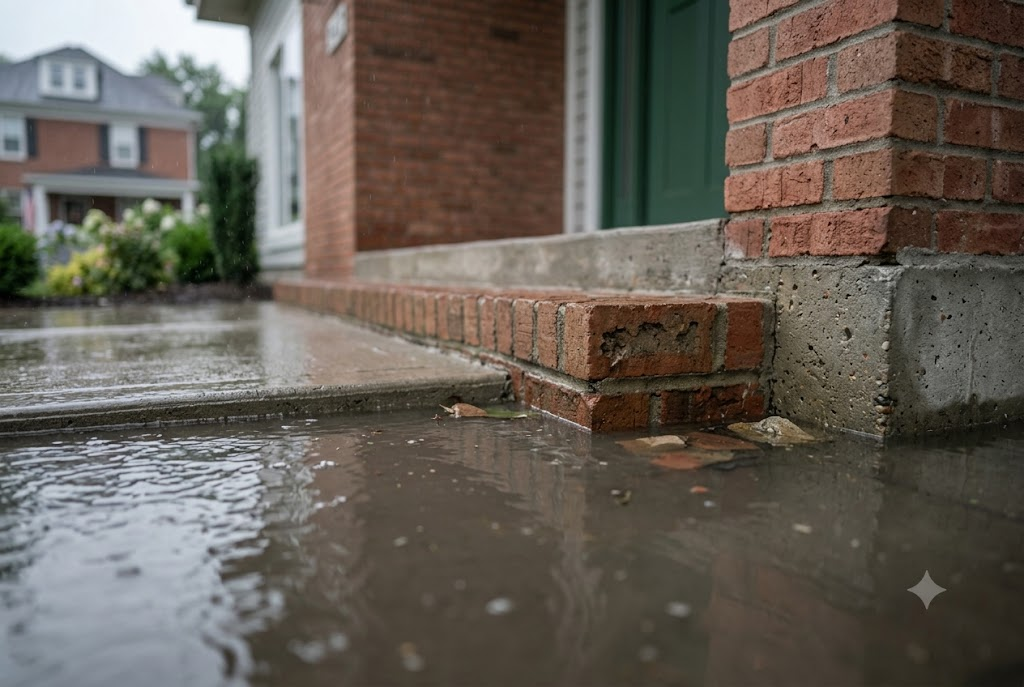
Broadly, flood means water that arrives from outside and rises.
Storm surge. Overflowing rivers or lakes. Surface water running across the ground. Flash flooding after heavy rain. Mudflow.
What isn’t flood: a burst pipe, an overflowing bathtub, a failed water heater, rain coming through a hole the storm made in your roof.
Those are water damage, and your landlord policy may well respond to them depending on your form and the cause.
The distinction is roughly this: if the water came from inside the building, or came in through damage a covered peril caused, that’s a landlord policy question. If the water was already outside on the ground and rose into the property, that’s flood.
The practical version: same storm, same property, same wet drywall, two entirely different policies depending on how the water got in.
Adjusters take this seriously, because it determines who pays.
The Zone Trap
Here’s where most landlords go wrong.
“I’m not in a flood zone” is the single most common reason people skip flood coverage.
It’s also not the protection people think it is.
Every property is in a flood zone. Some are just designated low-risk rather than high-risk. And a meaningful share of flood claims come from properties outside the mapped high-risk areas — estimates vary by source, but the commonly cited range runs from roughly a quarter to over 40% of claims.
California alone reportedly has around 600,000 properties at substantial flood risk sitting outside FEMA-designated high-risk zones.
Flood maps are drawn from historical data and modelling. They don’t account for the new development upstream, the drainage that’s aged out of adequacy, or the rainfall pattern that’s changed since the map was last revised.
Water doesn’t consult the map.
When You’re Required to Have It
The mandate is narrow and specific.
Flood insurance becomes mandatory when a property sits inside a FEMA-mapped Special Flood Hazard Area and carries a federally backed or federally regulated mortgage.
Both conditions. If either is missing, the federal requirement doesn’t apply.
Which is worth understanding clearly: outside the mapped high-risk zone, or without a mortgage, nobody makes you buy it. The risk doesn’t disappear. Only the requirement does.
And if you’re required to have it and don’t, your lender can force-place a policy on you. Those are typically more expensive and cover less. Not a position you want to be in.
The Two Ways to Get It
The NFIP
The National Flood Insurance Program is the federal option, administered by FEMA.
Confusingly, NFIP policies are usually sold through private insurers under the “Write Your Own” program. So your flood policy might arrive on the letterhead of a carrier you recognise while still being an NFIP product underneath.
The limits are where landlords need to pay attention.
For single-family homes, residential condos, and two-to-four-family buildings, NFIP building coverage caps at $250,000. For other residential buildings, the building limit is $500,000.
That’s a hard statutory cap. Not a starting point you can negotiate up.
If your rental costs $400,000 to rebuild and you carry NFIP building coverage, you’re self-insuring the difference.
Private Flood Insurance
The private flood market has grown substantially, from a small share of the market a decade ago to something approaching a third of it now.
Private carriers aren’t bound by the federal caps. Building limits in the millions are available, and some carriers offer meaningful loss-of-rental-income coverage for residential properties — which the NFIP does not.
Federal law allows lenders to accept private flood insurance in place of an NFIP policy, provided it meets the standard of being at least as broad as the NFIP coverage it replaces.
The tradeoff: NFIP is federally backed, which means claims get paid even after widespread catastrophic flooding. With a private carrier, payouts depend on that insurer’s financial strength.
The Contents Limit Doesn’t Mean What You Think
Every flood insurance article mentions the $100,000 contents limit.
For a landlord, that number is mostly irrelevant.
Contents coverage protects personal belongings — furniture, clothing, electronics. In your rental, those belong to your tenant. Your tenant buys their own contents coverage, through the NFIP or privately, and their renters policy won’t do it for them.
What you’re buying is building coverage.
Two exceptions worth noting.
Furnished rentals and short-term rentals. If you own the furniture, the appliances, the linens, and the television, contents coverage becomes relevant to you. And $100,000 goes faster than you’d think across a furnished unit.
Appliances and systems. The line between building and contents isn’t always where landlords assume. Worth asking your agent specifically rather than guessing.
Loss of Rent Is the Gap Nobody Mentions
This is the one that catches experienced landlords.
Your landlord policy includes loss-of-rent coverage. It responds when a covered peril makes the unit uninhabitable.
Flood isn’t a covered peril on that policy.
So if a flood makes your rental uninhabitable for four months, your landlord policy pays nothing toward the lost rent — because the cause of loss is excluded.
And an NFIP policy doesn’t cover lost rental income either. NFIP dwelling policies don’t include the additional living expenses or income protection that people assume comes standard.
Which means on a straightforward NFIP-plus-landlord-policy setup, four months of lost rent is entirely yours.
Some private flood carriers do offer loss of rental income. If your rental income actually matters to your finances — and for most landlords it does — that’s a specific question worth asking before you buy.
The Timing Trap
You cannot buy flood insurance when the forecast turns bad.
NFIP policies carry a 30-day waiting period from purchase to effective date.
There are exceptions. No waiting period if you’re buying while making, increasing, extending, or renewing a mortgage. No wait if you’re changing coverage at renewal. A one-day wait if your property has been newly mapped into a high-risk zone and you buy within roughly a year of the change.
Outside those, it’s 30 days.
Which means the week a storm forms offshore is about three weeks too late.
Private carriers sometimes offer shorter waiting periods, but not zero, and not once a named storm is already tracking toward you.
Flood insurance is bought in the calm.
The One Thing About NFIP Worth Knowing
The NFIP doesn’t have permanent statutory authority.
Congress reauthorises it periodically, and since 2017 that’s happened through a long series of short-term extensions rather than a durable multi-year renewal. The program has lapsed several times during that stretch.
What a lapse means in practice: the NFIP can’t issue new policies or renew existing ones until Congress acts. Policies already in force stay in force until their term ends. Claims continue to be paid while FEMA has funds. Private flood policies aren’t affected at all.
So it isn’t a doomsday scenario for anyone already covered. But it’s a real timing risk if you’re buying, closing on a property, or renewing during a gap.
Check the NFIP’s current authorization status before you act on any of this. FEMA publishes it, and it changes. If you’re mid-purchase on a property in a flood zone, that’s a question for your agent and lender on the day, not a fact you can take from an article.
Side by Side
| NFIP | Private Flood | |
|---|---|---|
| Building limit | $250,000 (1–4 family) | Often into the millions |
| Contents limit | $100,000 | Varies, often higher |
| Loss of rental income | Not covered | Sometimes available |
| Waiting period | 30 days, with exceptions | Varies, often shorter |
| Backed by | Federal government | The carrier’s own balance sheet |
| Available everywhere | Participating communities only | Depends on carrier appetite |
| Authorization risk | Subject to congressional reauthorization | Not affected |
What to Actually Do
Check your property’s flood risk, not just its zone. FEMA’s Flood Map Service Center is the official starting point for an address-level check. Then remember that the map isn’t the territory.
Work out your rebuild cost. If it’s above $250,000, NFIP alone leaves a gap. That’s when private or excess coverage enters the conversation.
Ask specifically about loss of rental income. Don’t assume. It’s the difference between a flood being expensive and a flood being ruinous.
Buy before you need it. Thirty days.
Check the NFIP’s status if you’re buying now. It changes, and it’s worth a direct question to your agent rather than a guess.
The Bottom Line
Flood is the largest single gap in a landlord policy and the one landlords are least likely to know about.
It isn’t hidden. It’s just never mentioned, because nobody sells you a thing by explaining what it doesn’t do.
Your landlord policy covers fire, wind, theft, vandalism, liability, and lost rent. It’s a good product.
It has nothing at all to say about water that rises.
If your rental sits anywhere near water, downhill from anything, or in a place where the rain has been getting heavier — and that’s most of the country now — the honest question isn’t whether you’re in a flood zone.
It’s what happens if you’re wrong about that.
Find Out What Your Policy Actually Covers
Whether you own one rental or several, comparing landlord insurance takes about a minute and shows you exactly where your coverage ends.
If you own rental property, flood is worth a separate conversation with your agent rather than an assumption at renewal.
The right landlord insurance policy covers what it covers well. Knowing where it stops is your job.