Renting on Airbnb? Your Standard Home Insurance May Not Be Enough
Most people assume their standard homeowners insurance already covers their property no matter what.
And honestly, that assumption makes sense at first.
You own the house. You already pay insurance premiums every month. So if something happens inside the property, the insurance company should step in, right?
Well, not exactly.
The moment a property starts generating income through platforms like Airbnb, VRBO, or Booking.com, the risk profile of that property changes completely in the eyes of insurers.
And this is where many short-term rental owners run into trouble.
A standard homeowners policy is primarily designed for owner-occupied living. Not for frequent guest turnover. Not for commercial activity. And definitely not for situations where strangers are staying in your property every few days.
That difference matters more than most STR hosts realize.
Why Homeowners Insurance Often Falls Short for STR Properties
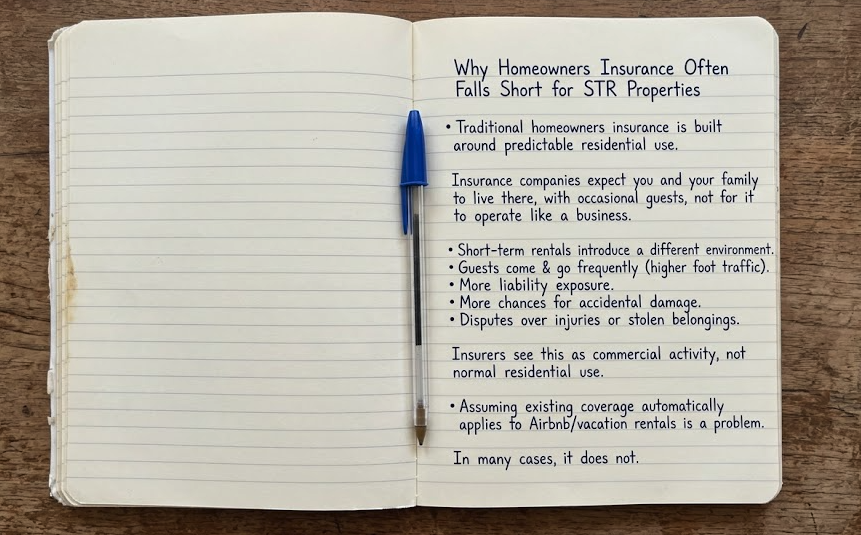
Traditional homeowners insurance is built around predictable residential use.
Insurance companies expect:
- you and your family live there
- occasional guests visit
- the property is not operating like a business
But short-term rentals introduce an entirely different environment.
Guests come and go frequently. There is higher foot traffic. More liability exposure. More opportunities for accidental damage. And in some cases, even disputes involving injuries or stolen belongings.
From an insurer’s perspective, that looks much closer to commercial activity than normal residential occupancy.
This becomes a problem when hosts assume their existing homeowners policy automatically covers everything related to their Airbnb or vacation rental operations.
In many cases, it does not.
Some policies may partially cover occasional rentals. Others may deny claims entirely if the insurer determines the property was being used commercially without proper disclosure.
And the difficult part is that many property owners only discover these gaps after filing a claim.
The Biggest Difference Between Homeowners and Landlord Insurance
The easiest way to think about it is this:
Homeowners insurance protects a personal residence.
Landlord insurance protects an income-generating property.
That sounds simple, but the actual coverage differences can be significant.
Landlord or STR-focused insurance policies are generally designed to account for:
- guest-related liability
- property damage caused by renters
- loss of rental income after covered events
- higher turnover risks
- commercial-style exposure
For example, imagine a guest accidentally starts a kitchen fire during a weekend stay.
A homeowners insurer may question whether the property was being used outside the intended residential purpose of the policy.
A landlord or STR policy, on the other hand, is typically structured with these scenarios in mind from the beginning.
That distinction can end up saving hosts thousands of dollars during a major claim.
What Airbnb and Other STR Platforms Already Provide
This is where many hosts get confused.
Platforms like Airbnb do offer certain protection programs to hosts.
Airbnb’s AirCover program, for example, includes some liability coverage and damage protection for eligible stays.
At a glance, this sounds reassuring.
And to be fair, these programs can absolutely help in certain situations.
But they should not be treated as a complete replacement for a dedicated insurance policy.
There are a few reasons for that.
First, platform protections usually come with limitations, exclusions, eligibility requirements, and claim procedures that hosts may not fully understand until something actually happens.
Second, these programs are primarily designed to protect the platform ecosystem itself. Not necessarily every edge case a host may encounter.
And third, relying only on platform coverage can leave major gaps involving:
- property structure damage
- extended vacancy periods
- lawsuits
- local compliance requirements
- loss of rental income
- certain guest-related incidents
The reality is that platform protection is helpful. But it is not the same thing as carrying your own properly structured STR insurance policy.
Get a quote now for STR insurance.
Why This Matters More for Short-Term Rentals
Short-term rentals operate in a gray area that traditional insurance was never originally built around.
An Airbnb property is not exactly:
- a normal home
- a hotel
- or a traditional long-term rental
It sits somewhere in between all three.
That creates insurance complexity.
And as cities across the United States continue tightening STR regulations, insurers are also becoming more cautious about undisclosed rental activity.
Some hosts try to avoid higher premiums by simply keeping their standard homeowners policy.
But that decision can become extremely expensive if a serious incident occurs and the insurer later determines the property was being used commercially.
At that point, the savings on premiums often look very small compared to the financial exposure.
Common Situations STR Insurance Can Help With
Here are a few examples where dedicated landlord or STR insurance may provide important protection:
- A guest slips near the pool and files an injury claim
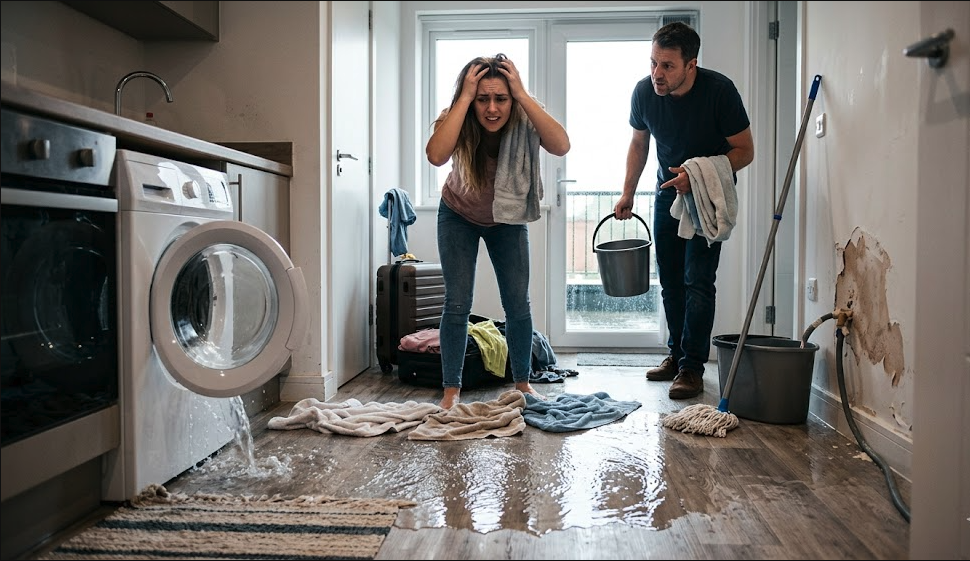
- Water damage forces cancellations for upcoming bookings
- Furniture or appliances are heavily damaged during a stay
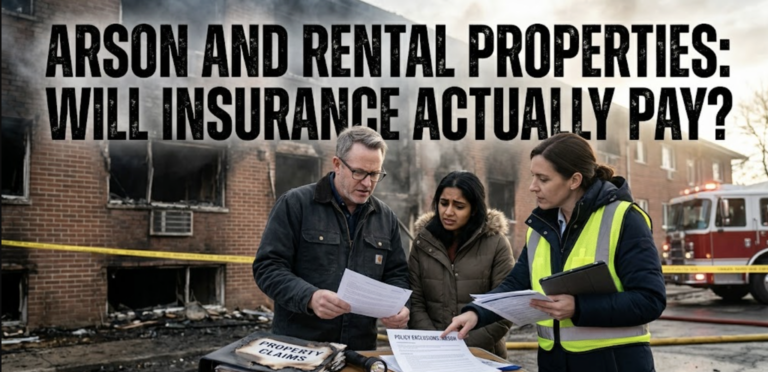
- A fire temporarily makes the property uninhabitable
- Theft occurs during a guest booking
- Loss of rental income after a covered event
These situations are not necessarily common every week.
But in the STR business, you are dealing with enough guest turnover that the probabilities eventually start adding up.
Especially for hosts managing multiple properties.
The Bottom Line
If you occasionally rent out a spare room once or twice a year, your insurance needs may look very different from someone actively operating a full-time short-term rental business.
But for serious Airbnb and vacation rental hosts, relying entirely on a standard homeowners policy is usually a risk not worth taking.
The reality is simple:
the property may still feel like a home to you, but from an insurance standpoint, it is also functioning as a business.
And businesses carry different risks.
That is exactly why landlord and STR insurance products exist in the first place.
If you currently host guests through Airbnb, VRBO, or other vacation rental platforms, it may be worth reviewing whether your current policy actually covers short-term rental activity properly.
Getting the right STR insurance quote now can be significantly cheaper than dealing with a denied claim later.