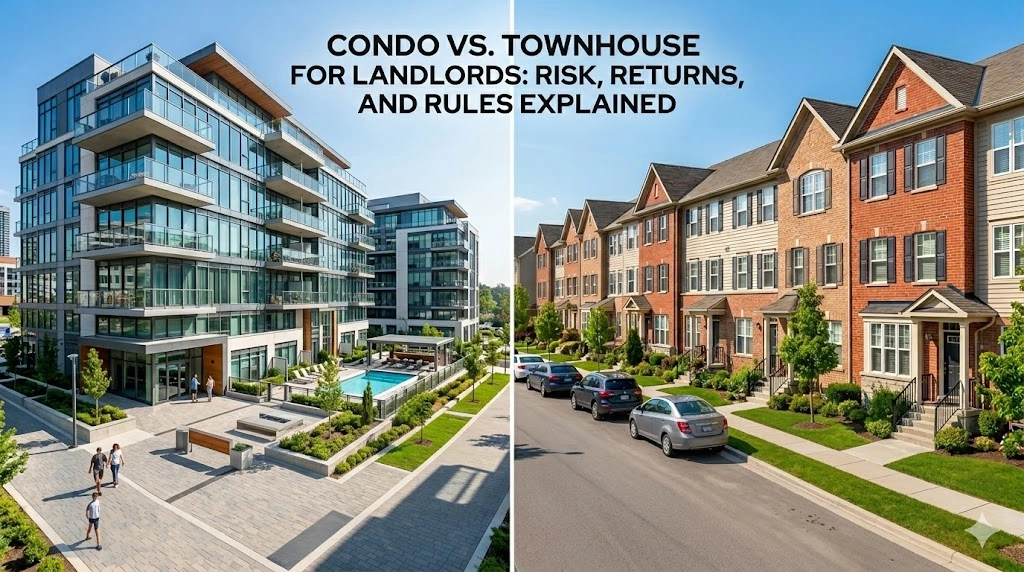
Condo vs. Townhouse for Landlords: Risk, Returns, and Rules Explained
Scaling a rental portfolio eventually leads most investors to a crossroads: sticking strictly to single-family homes, which are becoming increasingly capital-intensive, or exploring high-density, single-unit alternatives. Condominiums (condos) and townhouses are two of the most popular entry points for investors looking to diversify or stretch their purchasing power.
However, treating these two property types as interchangeable assets is a costly mistake. While both offer accessible price points and strong rental demand, their underlying operational realities are completely different.
Your choice dictates your maintenance budget, your legal constraints, your tax deductions, and crucially, your liability exposure. Here is the investor’s breakdown of how condos and townhouses stack up against each other, and how to choose the right asset for your portfolio.
The Anatomy of Ownership (What’s Actually Yours?)
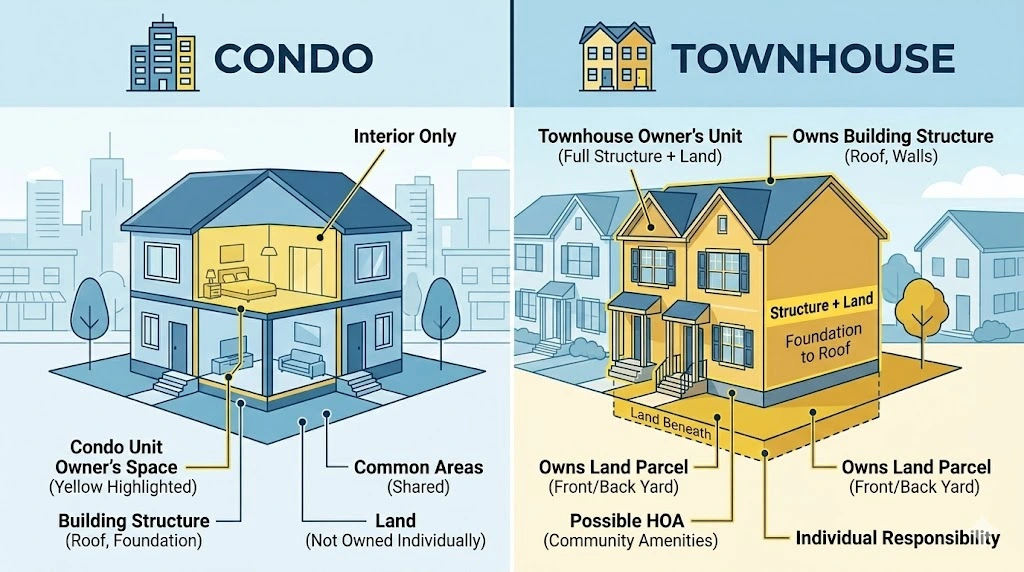
The entire financial and legal strategy for your property stems from where your property lines actually end. This legal distinction is the foundation of your investment.
- The Condo Model (“Walls-In”): When you buy a condo, you own the interior airspace of your unit. You do not own the exterior walls, the roof, the foundation, or the land underneath. Everything outside your drywall, including hallways, elevators, and the building envelope, is considered a “common element.” These are owned collectively and managed entirely by the Homeowners Association (HOA).
- The Townhouse Model (Fee Simple): Townhouse ownership is much closer to a traditional single-family home. You own the physical structure from the concrete foundation to the roof shingles, plus the specific parcel of land it sits on (which usually includes a front and back yard). While you share adjoining walls with neighbors, the physical dwelling is entirely your responsibility to maintain.
Cash Flow and Hidden Costs
Both property types can generate excellent yield, but their expense columns require completely different financial modeling.
The Condo Expense Profile
Condos offer highly predictable monthly expenses, making them ideal for out-of-state investors or those who prefer a hands-off approach.
- The HOA Advantage: The HOA handles all exterior maintenance, landscaping, snow removal, and amenity upkeep. You will never have to spend your weekend interviewing roofers.
- The Drawbacks: HOA fees take a significant, permanent bite out of your monthly cash flow (often ranging from $200 to $500+ per month). Additionally, you are at the mercy of “special assessments.” If the building needs a new roof or a plumbing overhaul and the HOA’s reserve funds are insufficient, you will be hit with a sudden, mandatory lump-sum bill.
- Tax Note: According to IRS guidelines, condo investors can generally deduct HOA fees as standard rental property expenses, alongside mortgage interest and taxes.
The Townhouse Expense Profile
Townhouses typically boast stronger month-to-month cash flow. HOA fees are either non-existent or significantly lower, usually only covering basic community upkeep like shared private roads or a neighborhood park.
- The Capital Expenditure (CapEx) Reality: Because you own the structure, you are responsible for all major repairs. If the HVAC dies or the roof reaches the end of its 15-to-25-year lifespan, that comes entirely out of your pocket.
- The Reserve Rule: Investors must maintain strict reserve accounts. Financial advisors typically recommend setting aside 1% to 2% of the property’s value annually, to protect their bottom line against these inevitable structural repairs.
- Tax Note: Non-structural upgrades you make to a townhouse often qualify for favorable bonus depreciation, offering a distinct tax advantage in the year you purchase or renovate the property.
Want to make sure your cash flow is protected? Check out Coverlyn’s definitive guide to rental property insurance.
Tenant Demographics & Yield Potential
The architectural differences between condos and townhouses naturally segment the rental market, affecting your turnover rate and rent ceilings.
- Who Rents Condos? Condos thrive in dense, urban environments. They attract young professionals, digital nomads, and downsizing seniors who prioritize walkability, location, and amenities (gyms, pools, security) over square footage. Because tenants often outgrow condos when they start families, turnover can sometimes be slightly higher.
- Who Rents Townhouses? Townhouses appeal heavily to families, remote workers needing dedicated office space, and tenants with pets. Because they offer multiple floors, private entrances, and private outdoor space, townhouses generally command higher monthly rent than a similarly located condo. Furthermore, families tend to stay longer to keep children in local school districts, reducing your turnover costs.
The Red Tape: HOAs, CC&Rs, and Legalities
Before signing closing documents, you have to audit the community’s governing rules. An overly restrictive HOA can turn a profitable asset into a massive liability.
Condo Warning Signs: Condos are notorious for strict rental caps. An HOA might mandate that only 10% of the building can be rented at any given time. If they are at capacity, you legally cannot place a tenant in your unit. They may also enforce minimum lease durations (killing any mid-term or corporate rental strategy), strictly limit pets, or require tedious board approval for your tenants. Note: High rental concentrations can also make the entire building “non-warrantable,” making it difficult for you to secure traditional financing.
Townhouse Flexibility: Because you own the land and structure, townhouse communities are generally much looser regarding rental restrictions. Your main legal hurdles will involve Covenants, Conditions, and Restrictions (CC&Rs) governing exterior aesthetics. You might be restricted on paint colors, landscaping standards, or the type of fence you can build, but you generally retain full control over who you rent to and on what terms.
Protecting the Asset: Your Insurance Strategy
This is where the ownership differences hit your wallet directly. Because the physical risks are different, landlord insurance (often called a DP3 policy) functions entirely differently for each asset.
Insuring a Rental Condo
Your landlord policy must work in tandem with the HOA’s master policy.
- How it works: The HOA insures the building’s exterior and structural framework. Your individual landlord policy only needs to cover the interior. You need coverage for improvements (like those new quartz countertops), robust liability protection against tenant injuries inside the unit, and loss of rent coverage.
- The Risk Gap: You must review the master policy. If the HOA carries a “bare walls-in” policy, it may not cover things like original drywall or plumbing fixtures. You are responsible for any coverage gaps.
- The Cost: Because you are insuring less physical structure, landlord condo policies are generally very affordable.
Insuring a Rental Townhouse
You are on the hook for the entire structure.
- How it works: You need comprehensive dwelling coverage from the foundation to the roof, detached structure coverage (for garages/sheds), and high liability limits.
- The Claim Scenario: Imagine a pipe bursts on the second floor. In a condo, the HOA’s insurance might cover the drywall repair, while your policy covers the paint and the tenant’s ruined rug. In a townhouse, the entire claim, from the ruined floors to the drywall to the structural water damage, falls squarely on your individual DP3 policy.
- The Cost: Insuring a townhouse typically runs 20% to 40% higher than a condo, but gives you absolute control over your coverage quality and limits.
The Verdict: Which Fits Your Strategy?
Neither asset is objectively better; it comes down to your operational capacity and investment goals.
If you want passive management, highly predictable monthly expenses, lower insurance premiums, and you don’t mind sacrificing some operational control to an HOA, a condo is a fantastic, scalable addition to your portfolio.
If you want maximum monthly cash flow, full autonomy over maintenance, the flexibility to attract long-term family tenants, and the willingness to manage your own structural repairs, a townhouse is the superior play.
Ready to Protect Your Rental Income?
Whether you’re closing on a high-rise condo or a family-friendly townhouse, standard homeowners insurance won’t protect you once a tenant moves in. You need specialized coverage built for the unique risks of rental property owners.
Coverlyn partners with Steadily to provide comprehensive, affordable landlord insurance policies tailored to your exact property type. Protect against property damage, liability, theft, and loss of rent in just a few clicks.