Loss of Rent Insurance: A Complete Guide for Landlords
Here’s every landlord’s worst nightmare: you wake up to a frantic call at 3 AM. Your rental property is on fire. Or maybe a storm just ripped half the roof off. Or pipes burst and flooded the entire place. The tenants are okay, thank god. But they can’t stay there. And now you’re looking at months of repairs while your mortgage payment keeps coming due like clockwork.This is exactly why loss of rent insurance exists.
Let’s talk about what it actually does and why you probably need it.
What Is Loss of Rent Insurance?
Loss of rent insurance (sometimes called fair rental value coverage) does one simple thing: it replaces your rent money when a disaster makes your property unlivable.
Here’s what it’s NOT: it’s not insurance for when tenants stop paying rent or break their lease. That’s a completely different thing. This only kicks in when actual physical damage forces your tenants out because the property isn’t safe or legal to occupy anymore.
Say a pipe bursts in January and floods your rental house. The damage is bad, we’re talking ruined floors, soaked drywall, possible mold issues. Your tenants have to move out while contractors spend two or three months fixing everything. During that whole time, loss of rent insurance covers the rent you’re missing out on.
Pretty straightforward, right?
When Does It Actually Pay Out?
Insurance companies need a few boxes checked before they’ll cut you a check:
- Your policy has to include this coverage (not all do automatically)
- The damage has to come from something your policy covers
- The property needs to be officially uninhabitable, not just inconvenient
- You need proof you were actually collecting rent (like a signed lease)
Most policies cover the usual suspects:
- Fire and smoke damage
- Water damage from burst pipes or plumbing disasters
- Storm damage: Wind, hail, the works
- Vandalism and break-ins
What it WON’T cover: tenants who bail on their lease, stop paying, or get evicted. That’s on you.
Here’s How It Works in Real Life
Let’s say you own a duplex in Ohio. One of your tenants leaves a space heater running near some curtains. You can guess what happens next.
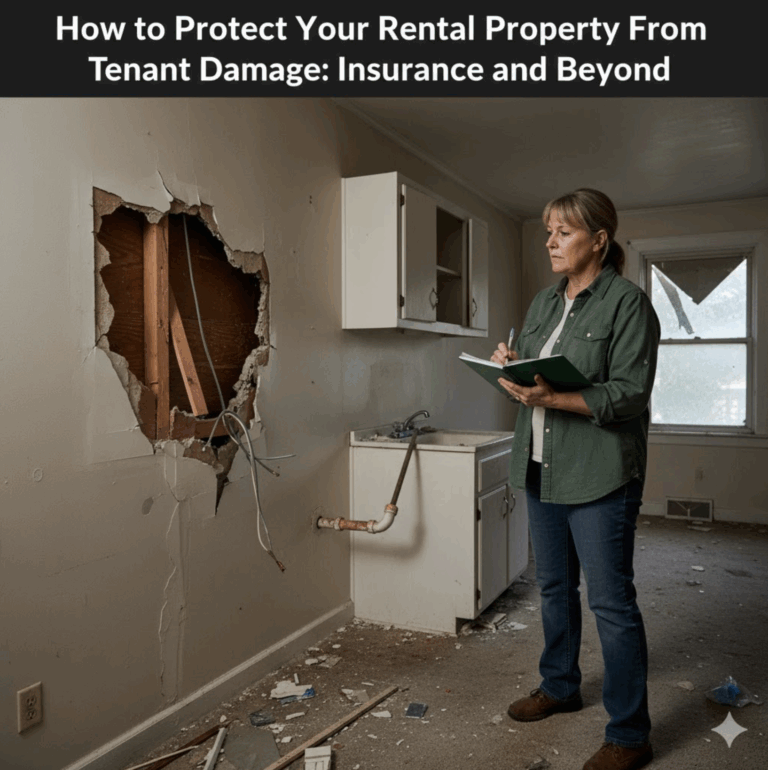
The fire department gets it under control, but one unit is completely trashed. Smoke damage everywhere, the kitchen’s gutted, part of the ceiling came down. Your insurance adjuster takes one look and says it’ll be four months minimum to fix everything.
Your rental property insurance covers the rebuild. But what about the $1,800 a month you were collecting? That’s where loss of rent insurance comes in. You get $7,200 total to cover those four months. That money keeps you from drowning while you’re still paying the mortgage, taxes, and insurance on a property that’s generating exactly zero dollars.
How Much Coverage Do You Need?
This depends on a few things:
- What you charge for rent each month
- How long repairs typically take in your area (hint: longer than you think)
- How many units you’ve got
- Whether you’re doing short-term rentals with seasonal income swings
Most landlord policies automatically include coverage equal to 20-25% of your dwelling coverage. So if your building is insured for $350,000, you’re probably looking at $70,000 to $87,500 in rental income protection.
Sounds like a lot, right? But here’s the thing: major repairs take FOREVER. Kitchen fires alone can easily need six months when you factor in permits, contractor delays, and material shortages. At $2,000 a month, that’s $12,000 gone. Multiple units? Do the math. It adds up fast.
What This Coverage Doesn’t Include
No insurance covers everything. Here’s what you need to know:
- Empty properties don’t count. If your unit was already sitting vacant for 30-60 days before the damage, you’re probably out of luck.
- Some disasters need their own policies. Floods and earthquakes aren’t covered unless you bought separate coverage for them.
- Maintenance issues are your problem. If something breaks because you didn’t keep up with repairs, don’t expect a payout.
- Tenant drama isn’t covered. Non-payment, lease violations, or tenants who just disappear—none of that triggers this coverage.
- It has to be actually unlivable. A leaky faucet or ugly water stain isn’t enough. We’re talking about damage that violates housing codes.
Why You Can’t Skip This
If you’re counting on rental income to cover your mortgage, this isn’t optional. It’s essential.
Repairs always take longer than anyone tells you. Contractors get backed up. Materials get delayed. The city takes weeks to approve permits. What should be a two-month job turns into four or five months real quick.
And here’s the kicker: your mortgage company doesn’t care. They want their money every month whether your property is making money or not. A few months without rental income can wipe out your entire year’s profit. Or worse.
Special Notes for Vacation Rentals
Running an Airbnb or Vrbo? The rules change. A regular landlord insurance policy often doesn’t cover, or severely limits, coverage for short-term rentals. You need specialized insurance built for vacation properties. These policies can include loss of rent insurance, but the coverage looks different because your income fluctuates way more than traditional rentals.
Talk to an agent who actually understands the vacation rental business. Trust me on this one.
Getting the Coverage You Need
Most good landlord policies (especially DP3 policies) include this either automatically or as an add-on. When you’re shopping around, ask:
- Is this included or do I need to add it?
- What disasters does it cover?
- What’s the maximum payout?
- How long will payments last?
- What documentation do I need for a claim?
Don’t wait until disaster strikes to figure out you’re not covered. If you own property in areas with severe weather, tornado alley, hurricane zones, places with brutal winters, this coverage isn’t nice to have. It’s a must-have.
Bottom Line
Loss of rent insurance isn’t some fancy extra. If you depend on rent to pay your bills or grow your portfolio, you need this coverage. Period.
Disasters don’t give you advance notice. And repairs will take twice as long as anyone promises. Whether you’re renting out a single-family home long-term or running vacation rentals, having coverage that replaces your income during repairs can be the difference between a bad month and a complete financial disaster.
Get Protected with Coverlyn
Rental income insurance is just one piece of building a solid insurance strategy for your investment properties. If you’re not certain whether your current coverage is adequate, we can help.
Get a quote from Coverlyn today and make sure your rental income stays protected no matter what challenges come your way.