Multi-Family Property Insurance Explained for Landlords
A lot of landlords start with a single-family rental.
One property.
One tenant.
One lease.
Insurance is usually fairly straightforward.
Then the portfolio grows.
Maybe you buy a duplex.
Then a triplex.
Then a small apartment building.
And that’s usually when landlords start realizing that multi-family properties bring a completely different set of risks.
The building may still be generating rental income.
But from an insurance perspective, the complexity increases significantly.
More tenants.
More units.
More common areas.
More liability exposure.
And that means the insurance needs often change as well.
What Counts as a Multi-Family Property?
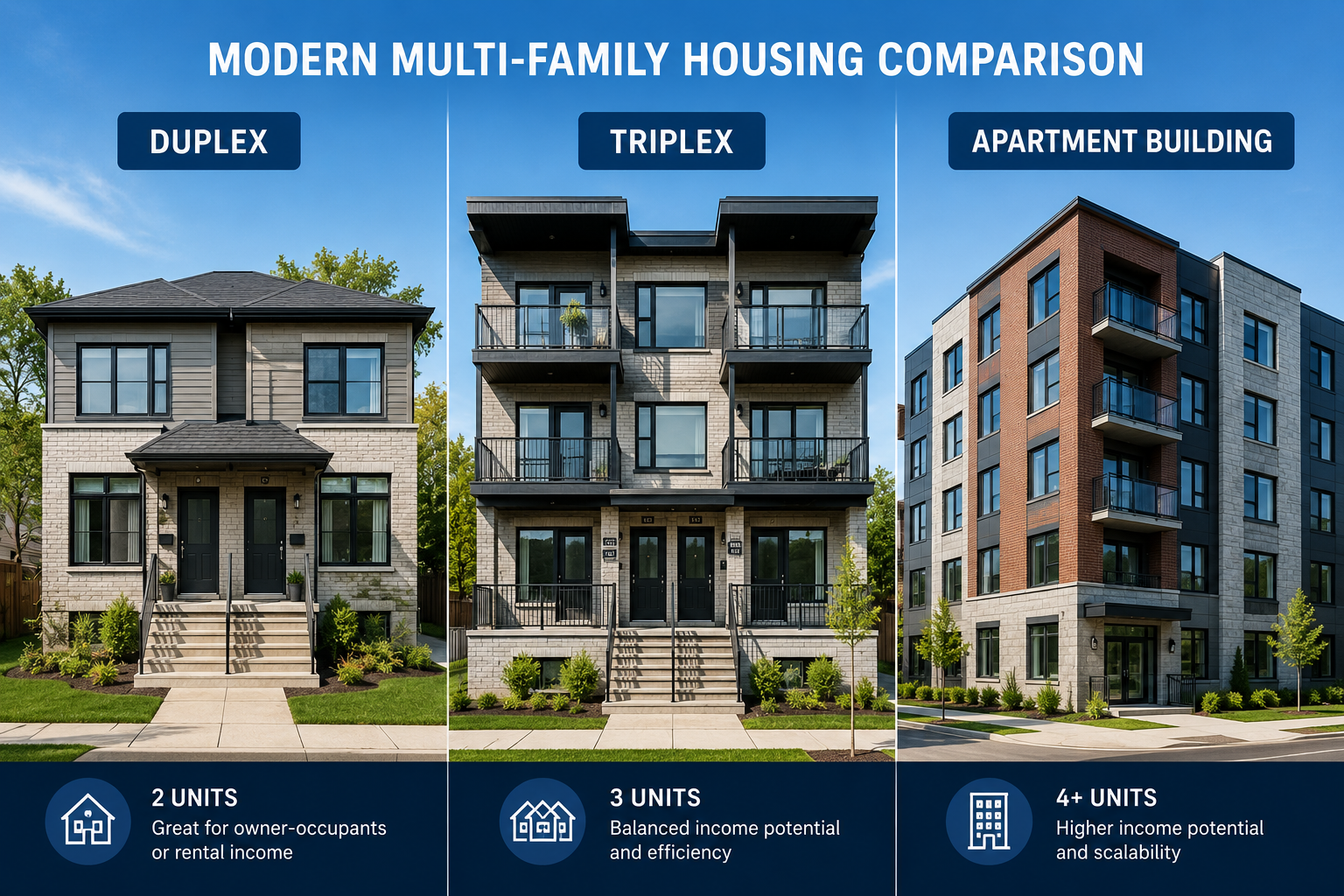
Generally speaking, a multi-family property is any residential building containing multiple separate rental units.
Examples include:
- duplexes
- triplexes
- fourplexes
- apartment buildings
- mixed-use residential buildings with multiple units
The exact insurance requirements can vary depending on:
- the number of units
- whether the landlord lives on-site
- property value
- occupancy levels
- and local regulations
But one thing is consistent:
more units usually mean more risk exposure.
Why Insurance Gets More Complicated
With a single-family rental, there is typically one household occupying the property.
A multi-family building is different.
Now you have:
- multiple tenants
- multiple guests
- shared hallways
- common entrances
- parking areas
- stairwells
- laundry facilities
- and additional maintenance responsibilities
Every additional tenant increases the chances of:
- liability claims
- accidental damage
- maintenance disputes
- water damage incidents
- fire risks
- and tenant-related complaints
That doesn’t mean multi-family properties are bad investments.
In fact, many investors prefer them because they can generate more stable cash flow.
But insurers recognize that the exposure is different.
And they price policies accordingly.
Liability Risks Increase Significantly
This is probably the biggest difference.
A duplex with two tenants naturally creates more liability exposure than a single-family home.
Now imagine a 20-unit apartment building.
There are simply more opportunities for something to go wrong.
For example:
- a tenant slips in a shared hallway
- a visitor falls on an exterior staircase
- poor lighting contributes to an accident
- a maintenance issue affects multiple units
Suddenly, one incident can impact several tenants at once.
This is why liability coverage becomes especially important for multi-family landlords.
The larger the building, the more important adequate liability limits become.
Shared Spaces Create Additional Exposure
One thing many first-time multi-family investors underestimate is the risk associated with common areas.
In a single-family rental, the tenant is usually responsible for most day-to-day use of the property.
In a multi-family building, landlords often remain responsible for areas such as:
- hallways
- staircases
- parking lots
- sidewalks
- elevators
- laundry rooms
- recreational facilities
These spaces create ongoing liability exposure because multiple people use them every day.
And unlike damage inside a tenant’s unit, accidents in common areas often fall directly back on the property owner.
Property Damage Can Affect Multiple Units
Another major difference is the potential scale of a claim.
For example:
A plumbing leak in a single-family rental might damage one kitchen.
A plumbing leak in a multi-family building could affect:
- multiple apartments
- ceilings
- flooring
- electrical systems
- and several tenants simultaneously
The same principle applies to:
- fires
- storms
- water damage
- HVAC failures
When multiple units are involved, claim costs often increase dramatically.
Which is one reason insurers typically view multi-family properties as higher-risk than comparable single-family rentals.
Tenant Density Changes Risk Calculations
More people means more activity.
More activity means more opportunities for incidents.
It’s not necessarily because tenants are careless.
It’s simply statistics.
A property housing 30 residents naturally experiences more wear and tear than a property housing three.
This affects:
- maintenance requirements
- claims frequency
- liability exposure
- and overall underwriting decisions
Insurance companies evaluate these factors carefully when determining premiums.
Rental Income Protection Becomes More Important
One interesting advantage of multi-family investing is income diversification.
If one unit becomes vacant, the entire property’s income doesn’t disappear.
But major property damage can still disrupt multiple rental streams at once.
Imagine a fire impacting:
- four apartments
- six apartments
- or an entire building wing
Now the landlord isn’t only dealing with repairs.
They’re potentially losing income from several units simultaneously.
This is why many multi-family investors pay closer attention to:
- loss-of-rental-income coverage
- business interruption protection
- vacancy-related endorsements
Compared to owners of smaller rental properties.
What About Short-Term Rental Buildings?
Some investors operate multi-unit properties as short-term rentals.
For example:
- small apartment buildings
- converted duplexes
- vacation rental complexes
These properties introduce another layer of complexity because insurers must account for:
- higher guest turnover
- commercial activity
- increased liability exposure
- more frequent occupancy changes
In these situations, landlords often need specialized coverage designed specifically for short-term rental operations.
A standard landlord policy may not always provide the protection required for these types of properties.
Ways Multi-Family Landlords Can Control Insurance Costs
Insurance costs generally rise as properties become larger and more complex.
However, landlords can often reduce risk by:
- maintaining common areas properly
- upgrading electrical systems
- replacing aging plumbing
- improving security measures
- installing exterior lighting
- conducting regular inspections
- documenting maintenance activities
Insurers typically view well-maintained buildings more favorably than properties showing signs of deferred maintenance.
And over time, good risk management often translates into fewer claims as well.
The Bottom Line
The move from single-family investing to multi-family ownership is often one of the biggest milestones in a landlord’s journey.
But the insurance side changes too.
More units mean:
- more tenants
- more liability exposure
- larger potential claims
- and greater operational complexity
That doesn’t mean multi-family properties are harder to insure.
It simply means landlords need coverage that reflects the realities of managing a larger and more active property.
Because when something goes wrong in a multi-family building, the financial impact often affects far more than just one tenant.
If you own a duplex, apartment building, or other multi-family rental property, reviewing your insurance coverage regularly can help ensure your policy keeps pace with the risks that come with a growing portfolio.
The right landlord insurance policy should protect not only the building itself, but also the income and liability exposure that come with managing multiple tenants under one roof.
Whether you own a long-term rental, vacation home, or Airbnb property, comparing landlord insurance options only takes a minute and could save you from expensive surprises later.Protect Your Rental Property With the Right Coverage